Blog / The Creator Economy Is Changing the Future of Design Education Businesses in India
Tuesday, 18 Aug 2026
The Creator Economy Is Changing the Future of Design Education Businesses in India
What if the next big opportunity in the education business is being created by people who spend their days designing, creating and sharing content online?
India's creative landscape is changing quickly. From fashion creators and interior designers to graphic designers and visual content creators, more people are turning creativity into careers and businesses. At the same time, brands are looking for better visual communication and digital content.
India's digital audience provides a strong foundation for this change. According to DataReportal's Digital 2026 India report, the country had more than 1 billion internet users in late 2025. This growing digital presence is creating more opportunities for people and businesses involved in design and content creation. As the creator economy in India continues to expand, the demand for creative education is evolving alongside it. This shift is opening up a promising space for entrepreneurs who want to build an education business that connects creativity, technology and emerging career opportunities.
Understanding the Creator Economy and Its Rapid Growth in India
The creator economy has moved far beyond influencers posting on social media. Today, it includes designers, photographers, animators, video creators, fashion professionals, illustrators and entrepreneurs who use digital platforms to build audiences and businesses.
This Rapid Growth is changing the way people think about careers. Creativity can now be connected to freelancing, entrepreneurship, personal branding, e-commerce and digital marketing.
Social media adoption has played an important role in this transformation. Platforms allow creators to display their work, connect with potential customers and reach audiences beyond their local markets. For education businesses, this creates an interesting opportunity: people entering this economy need practical knowledge to turn creative interests into professional capabilities.
What the Creator Economy Includes
The creator economy is closely connected to the wider digital economy.
A fashion designer can build a digital portfolio and promote a collection online. An interior designer can showcase completed projects through visual content. A graphic designer can work with clients in different cities. An animator can contribute to advertising, entertainment or online content. This has also encouraged digital entrepreneurship, where individuals can combine creativity with technology to create independent businesses.
As these career paths become more visible, students and aspiring professionals are increasingly looking for education that goes beyond traditional classroom learning.
The Rise of India's Digital Creator Landscape
India's creator ecosystem is also becoming more diverse.
A 2026 report from the Indian School of Business and HashFame found that India's creator base grew from approximately 0.96 million in 2020 to 4.12 million in 2025. The growth shows how quickly content creation and digital platforms have become part of India's professional landscape. The important point is that the creator economy is not limited to a small group of social media personalities. It is creating demand for a wider range of creative capabilities.
This makes access to quality design education increasingly relevant, particularly for young people who want to build careers around creativity and digital platforms.
Why the Creator Economy Is Driving Demand for Design Education
The creator economy has changed the value of design.
A good idea may attract attention, but strong visuals can determine how that idea is presented. Whether it is a fashion brand, an interior project, a YouTube channel or an online business, design plays an important role in creating a professional identity. This is why design education in India has an opportunity to grow alongside the creator economy.
Students are no longer looking only for conventional career paths. Many are interested in creative careers that allow them to work with brands, build portfolios, take up freelance projects or eventually start their own ventures. This is where creative education can provide a structured foundation.
How the Creator Economy Is Redefining Design Education
The future of design education is likely to become more closely connected with technology and real-world applications.
Students want to understand how design knowledge can be used outside the classroom. They want to create portfolios, work on projects and understand the tools used in today's creative industries.
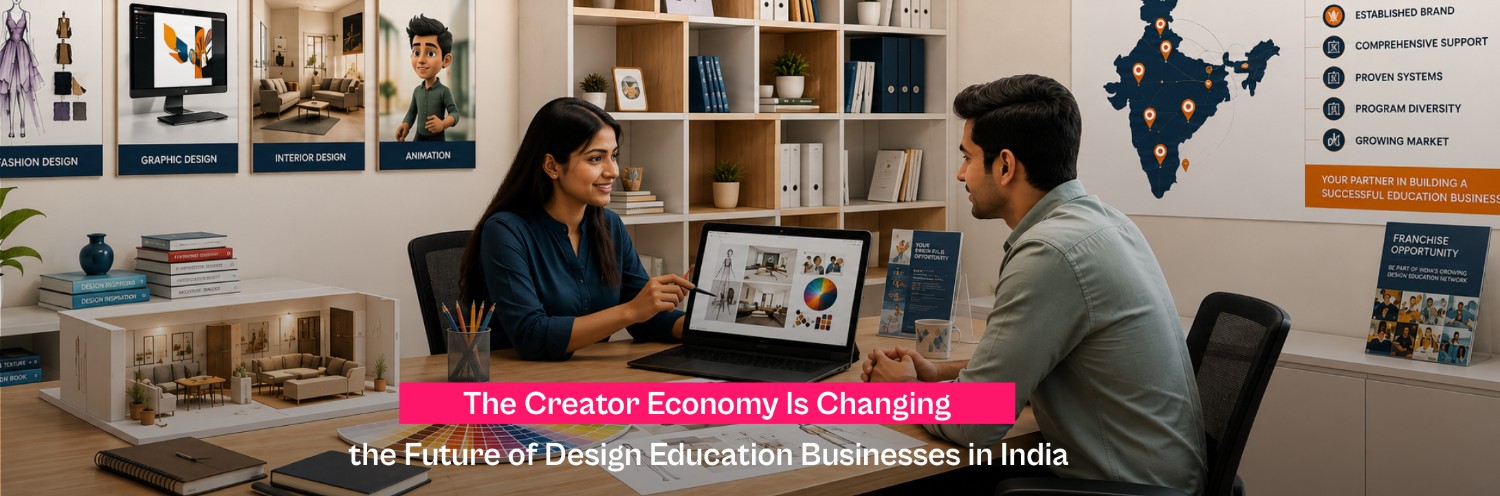
For design education providers, this creates an opportunity to offer programmes that connect areas such as:
- Interior design and visualisation
- Fashion design and digital presentation
- Graphic design and branding
- Animation and visual content
- Design software and technology
- Portfolio and project development
The changing creator economy therefore allows design institutes to become more than traditional training centres. They can become places where aspiring designers explore different career and entrepreneurial possibilities.
The Growing Franchise Opportunity in India's Design Education Market
Here is where the opportunity becomes particularly interesting for entrepreneurs.
The demand for creative education is growing, but starting an independent education centre requires planning. From selecting programmes and developing the curriculum to marketing the centre and building student trust, an entrepreneur needs to manage many areas. A franchise model can provide a more structured way to enter the market.
The opportunity becomes even more interesting outside major metropolitan cities. The ISB-HashFame report found that 66% of India's creators are now from non-metro markets, highlighting how creativity and digital entrepreneurship are spreading across the country. For entrepreneurs, this opens the possibility of taking design education closer to emerging creative communities rather than limiting it to major cities.
Dreamzone and the New Opportunity in Design Education
This is where Dreamzone enters the picture.
Dreamzone provides entrepreneurs with an opportunity to enter the creative education market through a franchise model. Its programmes cover areas such as interior design, fashion design, animation and graphics, allowing a franchise centre to serve students with different creative interests. For a prospective franchisee, this variety can be valuable. Instead of building a business around a single creative discipline, entrepreneurs can create a broader design education offering for their local market.
Dreamzone also provides franchise support across important areas of centre development and operations, helping entrepreneurs approach the education business through an established model. The opportunity is not simply about opening a centre. It is about becoming part of an education network that is connected to a market being shaped by creativity, technology and digital entrepreneurship.
The Future of Design Education Franchise Opportunities in India's Creator Economy
The future of Franchise opportunity in India's creative education market could be shaped by one simple change: people are increasingly looking for ways to turn creativity into a career.
Fashion, interior design, graphics and animation are no longer restricted to traditional employment paths. Digital platforms have created additional ways for creative professionals to showcase their work, find clients and build businesses. This creates a strong reason for entrepreneurs to explore education franchise opportunities in the creative sector.
However, choosing the most profitable education franchise should not be based on profitability alone. Entrepreneurs should also consider market demand, programme variety, brand support, location, operational systems and the long-term potential of the industry. For someone who wants to enter the education business while being connected to the growing creative economy, a Dreamzone franchise offers an opportunity to build a local design education centre under an established brand.
Conclusion
The creator economy is changing more than social media. It is changing how people think about careers, entrepreneurship and education.
As creative careers become more visible, the need for accessible and practical design education is likely to grow with them. This creates an opportunity not only for students, but also for entrepreneurs who want to build businesses around the future of creativity.
A Dreamzone franchise can give entrepreneurs a structured path to participate in this growing market and become part of a wider creative education network. The creator economy is already changing India's professional landscape. The bigger opportunity may be in helping the next generation become part of it.
Frequently Asked Questions

Corporate Headquarters
No. 25, Dr. Radhakrishnan Salai, Mylapore,
Chennai - 600 004, Tamil Nadu, India.
+91 98843 85048


Flagship Events
Trending Courses
Fashion Design
Interior Design