Blog / 7 Essential Steps to Launch Your Own Interior Design Business
Sunday, 16 Aug 2026
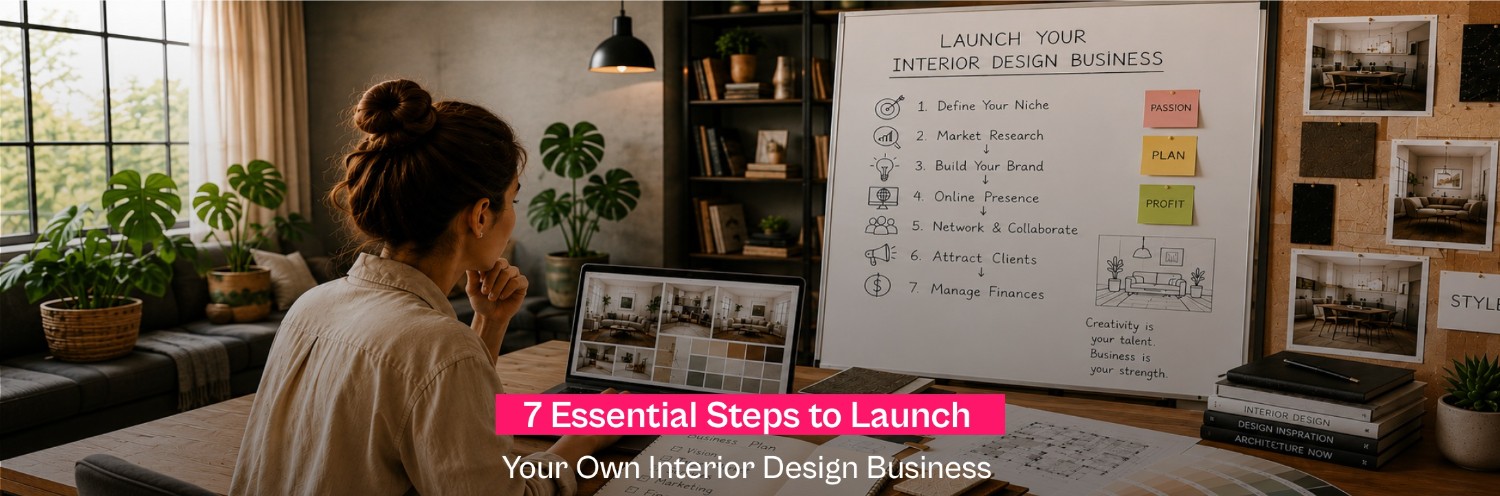
7 Essential Steps to Launch Your Own Interior Design Business
Being good at design can help you create beautiful spaces, but building an interior design business requires more than creativity. Client expectations, pricing, marketing, project timelines, suppliers, and finances all become part of the designer's responsibility.
The right foundation can make that transition easier. Combining design knowledge with business skills can help aspiring designers turn their creative ideas into a structured practice and build a sustainable career.
A successful design practice is rarely built overnight. The decisions made before taking on major projects can shape how the business grows.
1. Define Your Niche and Business Vision
Trying to appeal to everyone can make it harder for the right clients to recognise your work.
Start by deciding what type of spaces you want your business to specialise in. You could focus on residential interior design, commercial spaces, hospitality, retail, kitchens, or other areas that match your interests.
Your preferred design style also helps establish your identity. For example, a designer focused on contemporary homes can build a portfolio around modern apartments, villas, and residential spaces. A clear niche can also make decisions about services, pricing, marketing, and project selection easier as the business develops.
2. Research the Market and Create a Business Plan

A great design idea does not automatically make it a profitable business.
Before investing heavily, take time to understand the market. Research your target clients, competitors, local demand, popular design preferences, and the services people are willing to pay for. Use this information to create an interior design business plan covering your target audience, services, expenses, pricing, marketing strategy, and financial goals.
Be clear about your interior design services. These could include concept development, space planning, 2D and 3D visualisation, material selection, styling, project coordination, or complete design and execution. Your pricing approaches should match the scope of work. Depending on the project, designers may use fixed fees, hourly charges, percentage-based fees, or a combination of models.
3. Build Your Interior Design Brand
Before a client hires you, they need a reason to remember you.
A professional brand gives your business a recognisable identity. Choose a professional business name, develop a consistent visual identity, and make sure your communication reflects the kind of work you want to attract. Your interior design portfolio is equally important. It gives potential clients a chance to understand your approach before they trust you with their space.
New designers may not have years of client work, but academic projects, concept designs, 3D visualisations, and smaller projects can demonstrate creativity and technical ability. As you gain experience, update the portfolio with stronger interior design projects that represent the direction of your business.
4. Create a Strong Online Presence
Your next client may already be searching for an interior designer online.
A professional website can bring your portfolio, services, contact details, and testimonials together in one place. Social media can complement it by showcasing completed projects, design concepts, before-and-after transformations, and useful design ideas. This is where interior design marketing becomes important. Consistent and relevant content can help potential clients understand your style and expertise.
Building trust matters just as much as gaining visibility. Genuine reviews, project photographs, clear service information, and client testimonials can make your business appear more credible. If you serve a specific city or region, local SEO can also help people discover your business when searching for interior designers nearby. A well-maintained Google Business Profile and relevant location information can support local visibility.
5. Build Your Network and Collaborate

One reliable professional connection can sometimes lead to your next project.
Interior design involves collaboration with architects, contractors, carpenters, lighting specialists, painters, and furniture suppliers. Building relationships with dependable professionals can make project execution smoother and give you access to useful resources.
Networking can also create opportunities through referrals. Stay connected with previous clients, attend industry events, collaborate with other professionals, and participate in relevant design communities. Over time, these relationships can become an effective business growth strategy, helping you find new interior design projects without depending entirely on paid marketing.
6. Attract and Retain Clients
Getting a client is only half the job. Keeping that client confident throughout the project is what builds a reputation.
Your client acquisition strategy can include referrals, social media, networking, local search, partnerships, and portfolio-driven enquiries.
Once a client comes on board, clear communication becomes essential. Discuss the scope, budget, timelines, deliverables, and revisions before work begins. Regular updates can also help clients understand the progress of their project. A satisfied client may provide a testimonial, recommend your services, or return for another project. Strong relationships can therefore become an important source of long-term business.
7. Manage Your Finances and Daily Operations
A growing project list sounds exciting until deadlines, expenses, and responsibilities become difficult to track.
Good business management keeps an interior design company organised as it grows. Create systems for tracking project expenses, invoices, supplier payments, client payments, and operating costs. Clear financial records can help you understand whether each project is actually profitable.
Daily operations also include scheduling, contracts, procurement, documentation, client communication, and contractor coordination. Simple systems established early can prevent administrative work from becoming overwhelming later. Creativity may attract clients, but organised operations help turn that creativity into a sustainable business.
How Dreamzone's Interior Design Training Can Help You Build Your Career

Learning interior design is not only about making a space look good. Professional designers also need knowledge of space planning, materials, visualisation, software, and project execution.
Dreamzone's interior design programs cover areas such as interior design fundamentals, space management, design development, building services, and project work. Learners also get exposure to interior design software used for design and visualisation.
Dreamzone's Post Graduate Diploma in Interior Architecture and Design also includes areas such as brand development and business building, project management, client management, professional portfolio creation, and setting up an interior design business. This combination can be useful for aspiring designers who want to understand both the creative and professional sides of the industry while developing a foundation for a successful interior design business.
Conclusion
Starting an interior design business requires more than creative ability. A clear niche, strong portfolio, professional network, effective marketing, client relationships, and organised operations can help turn design expertise into a sustainable practice.
For those looking to explore business opportunities within the creative education space, an interior design franchise can offer another path to build on their interest in the industry.
Frequently Asked Questions


Corporate Headquarters
No. 25, Dr. Radhakrishnan Salai, Mylapore,
Chennai - 600 004, Tamil Nadu, India.
+91 98843 85048


Flagship Events
Trending Courses
Fashion Design
Interior Design