Blog / The Hidden Cost of Fast Fashion: Who Really Pays for Cheap Clothes?
Wednesday, 13 May 2026
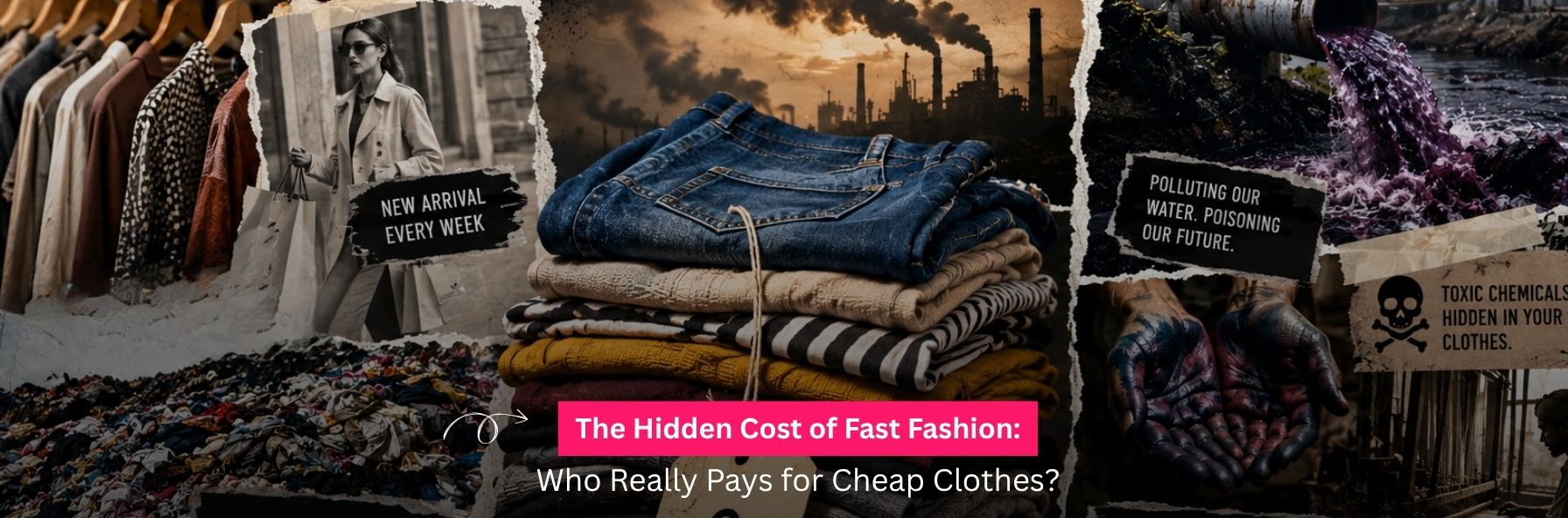
The Hidden Cost of Fast Fashion: Who Really Pays for Cheap Clothes?
A dress trending on social media in the morning gets sold out by night. A new collection appears every week. Discounts feel endless, and buying affordable trendy clothes has become easier than ever. Today’s generation shops faster than ever before, driven by changing fashion consumer behavior and the rise of online fashion shopping platforms. What once took months to reach stores now arrives in days. The demand for affortable apparel has completely transformed the fashion industry.
But behind every low-cost outfit is a story most people never see. A ₹499 shirt may look harmless on a shopping app, but someone, somewhere, is paying the hidden price for it. Sometimes it is the environment. Sometimes it is the worker. Sometimes it is the farmer. The real question is not how cheap fashion has become. The real question is who absorbs the actual cost behind it.
Why Is Fast Fashion So Cheap?
The modern garment industry is built on speed and volume. Brands produce thousands of styles quickly to keep up with changing trends and social media influence. The system depends heavily on mass clothing production, low-cost labor, synthetic materials, and aggressive pricing strategies.
This is why consumers can easily purchase Cheap Clothes without thinking twice. The faster brands manufacture, the lower the production cost becomes. However, reducing cost often means compromising quality, fair wages, and sustainable practices.
Many companies now release new collections almost every week. This constant cycle pushes consumers to buy more and discard more. As a result, clothing is increasingly treated like a disposable product instead of something valuable.
The Environmental Impact of Textile Waste
Fashion is now considered one of the world’s most polluting industries. Every year, millions of tons of clothing waste end up in dumping yards and oceans. Most discarded garments are made using synthetic fibers that do not decompose easily.
This creates severe landfill pollution, especially in developing countries where textile waste is often dumped without proper treatment. The impact of textile waste goes beyond visible garbage. It affects water systems, soil quality, and even air pollution through burning discarded fabrics.
Experts have repeatedly highlighted the growing issue of Fashion Pollution. Fast fashion production consumes massive amounts of water, energy, and chemicals. A single cotton T-shirt can require thousands of liters of water to produce, while synthetic garments release microplastics into oceans during washing.
The environmental damage created by fast fashion is no longer hidden. It is becoming impossible to ignore.
Toxic Chemicals Hidden in Everyday Clothing
Most consumers rarely think about what their clothes are made of. However, many garments contain Toxic Chemicals in Clothes used during dyeing, finishing, and processing.
Large-scale fashion manufacturing relies heavily on synthetic dyes, chemical treatments, and petroleum-based fabrics like polyester clothing. These materials help brands reduce costs and speed up production, but they also create environmental and health concerns.
Today, the conversation around Sustainable Clothing is growing because consumers are becoming more aware of these hidden impacts. Reports have shown that untreated dye waste from factories pollutes rivers and affects surrounding communities.
At the same time, synthetic fabrics dominate global fashion because they are cheaper and easier to mass produce. Unfortunately, this convenience comes with long-term environmental consequences.
The Decline of Traditional Weaving and Khadi Culture
While fast fashion grows, traditional craftsmanship continues to struggle. India’s Handloom Industry, once deeply connected to local identity and livelihood, now faces increasing pressure from factory-made alternatives.
Authentic Khadi Clothing and handmade fabrics take time, skill, and patience to produce. However, machine-made products can now replicate similar looks at much lower prices.
This shift has reduced the value of craftsmanship. Many weaving communities are struggling to sustain their livelihoods despite working with high-quality materials like Indian cotton. Younger generations are also moving away from weaving because the income is often unstable.
As consumers chase faster trends, traditional textile culture slowly loses visibility.
As consumers chase faster trends, traditional textile culture slowly loses visibility.
Bt Cotton, Farmer Crisis, and the Story Behind Tula
The fashion supply chain begins much earlier than most people realize. Before clothing reaches factories or stores, it starts with farming. The rise of genetically modified cotton has significantly changed the Reality of Cotton Farming in India.Many farmers today face increasing production costs, unpredictable weather conditions, and unstable market prices. This has made sustainable farming more important than ever.
During the Dreamzone webinar conducted on May 9, students had the opportunity to learn about these realities through insights shared by Mr. Anantha Sayanan, Founder of Restore and Co-Creator of Organic Farmers Market (OFM). With over two decades of experience connecting agriculture, sustainability, and ethical production, he explained how fashion is deeply connected to farming communities and environmental responsibility.
During the Dreamzone webinar conducted on May 9, students had the opportunity to learn about these realities through insights shared by Mr. Anantha Sayanan, Founder of Restore and Co-Creator of Organic Farmers Market (OFM). With over two decades of experience connecting agriculture, sustainability, and ethical production, he explained how fashion is deeply connected to farming communities and environmental responsibility.
The session also highlighted the work of Tula, an initiative focused on supporting weavers and farmers through ethical production systems. Tula works closely with organic cotton farmers, handloom artisans, and natural dye processes to build a more sustainable and fair textile ecosystem. Their working model focuses on transparency, local craftsmanship, and reducing harmful industrial practices while helping weaving communities sustain their livelihoods.
This perspective helped students understand that fashion is not only about trends. It is also about people, ecosystems, and responsibility.
This perspective helped students understand that fashion is not only about trends. It is also about people, ecosystems, and responsibility.
Can Sustainable Fashion Really Make a Difference?
The idea of sustainability is no longer limited to luxury brands or niche communities. Consumers are slowly moving toward ethical fashion and more responsible buying habits.
Simple actions like choosing to recycle clothes, supporting local artisans, and investing in durable garments can reduce environmental impact significantly. This growing awareness is driving the movement toward conscious consumerism.
Simple actions like choosing to recycle clothes, supporting local artisans, and investing in durable garments can reduce environmental impact significantly. This growing awareness is driving the movement toward conscious consumerism.
Brands are also exploring better alternatives through eco-friendly clothing, organic fabrics, and low-impact production systems. Although sustainable fashion still faces challenges related to pricing and scalability, the conversation is becoming stronger every year.
The future of fashion may not depend on buying less fashion altogether. It may depend on buying more responsibly.
Conclusion
The conversation around Sustainable Clothing is no longer optional. Consumers, brands, designers, and industries are all becoming part of a larger discussion about responsibility and impact.
The future of sustainable fashion depends heavily on awareness and action. As people become more informed, conscious consumerism will continue influencing how fashion is produced and purchased. This shift is also changing the way students look at a Career in Fashion design, where sustainability, ethical production, and responsible creativity are becoming equally important as trends and aesthetics.
Cheap fashion may look affordable at first. But when environmental damage, worker exploitation, and farming struggles are considered, the hidden cost becomes much larger than the price tag.
Fashion has always reflected society. The question now is whether it can also reflect responsibility.
Frequently Asked Questions


Corporate Headquarters
No. 25, Dr. Radhakrishnan Salai, Mylapore,
Chennai - 600 004, Tamil Nadu, India.
+91 98843 85048


Flagship Events
Trending Courses
Fashion Design
Interior Design




© Dreamzone , All rights reserved