Blog / AI vs Human Fashion Designers: Who Creates Better Fashion in 2026?
Monday, 18 May 2026
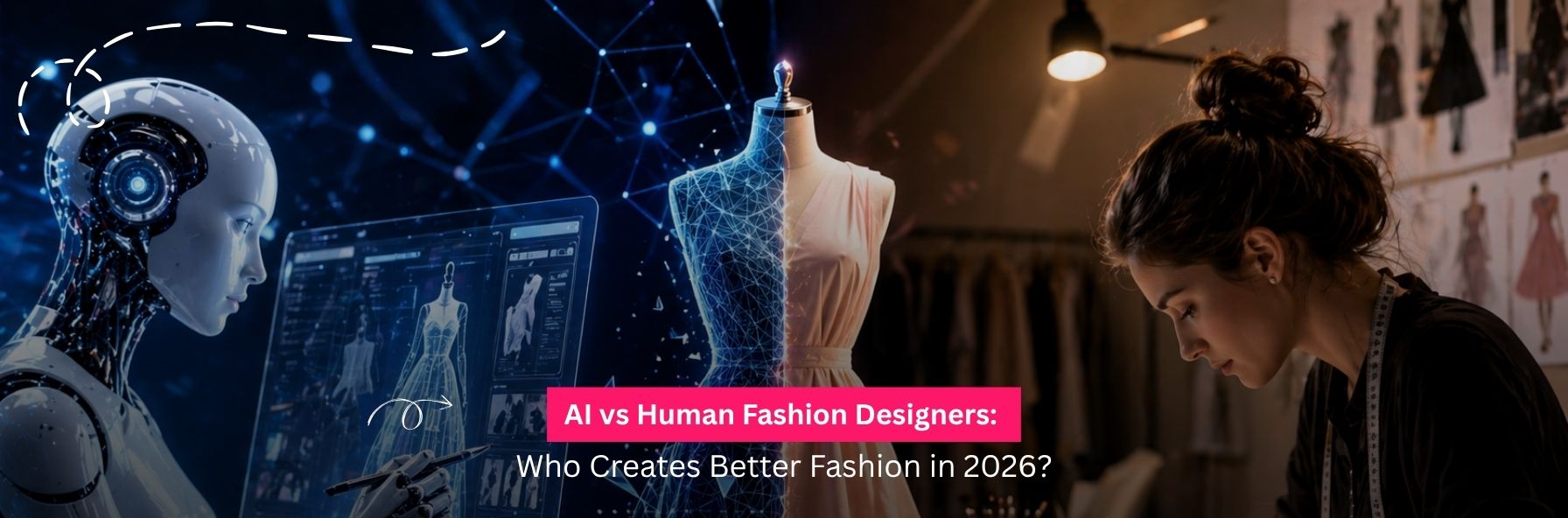
AI vs Human Fashion Designers: Who Creates Better Fashion in 2026?
The runway lights turned on slowly as the audience waited for the next collection to appear. Backstage, designers adjusted fabrics, reviewed details, and stared at their final looks one last time. On one side of the room were collections developed through months of creative effort, mood boards, and hand drawn sketches. On the other side were garments generated using advanced algorithms within hours. This is where the debate of ai vs human has become impossible to ignore.
The rise of ai in fashion design is transforming the global fashion industry faster than anyone expected. What once seemed experimental is now becoming part of mainstream fashion production. AI can now generate designs, predict trends, and analyze customer preferences with extraordinary speed. But while technology is becoming smarter, fashion still remains deeply connected to human emotion, storytelling, and creativity. The real question in 2026 is not whether AI can create fashion. The question is whether it can truly replace the human designer behind it.
What Is AI in Fashion Design?
Artificial intelligence in fashion refers to the use of advanced technologies and data systems to assist in design, forecasting, production, and customer experiences. Instead of relying only on manual creative processes, brands are now integrating AI tools to improve speed, efficiency, and personalization.
Fashion companies today use AI to study shopping habits, analyze visual trends, and create new design concepts. This transformation is changing how fashion collections are imagined and produced across the industry.
How AI Tools Work in Fashion?
Modern fashion AI systems are powered by machine learning and generative ai technologies. These tools study massive amounts of fashion-related data including customer interests, social media behavior, runway trends, and purchasing patterns.
The rise of generative ai fashion tools allows systems to create garment concepts, textures, and silhouettes within seconds. By studying consumer behavior, AI can identify patterns in what people buy, wear, and search for online. It can also generate unique fabric patterns and color combinations based on trend predictions.
This helps brands respond faster to changing market demands while reducing experimentation costs.
Popular AI Fashion Tools in 2026:
Fashion technology in 2026 has become far more advanced than basic design software. Brands now use specialized ai design software to generate concepts, simulate garments, and visualize collections digitally before production begins.
Through virtual prototyping, designers can see how fabrics move and fit without physically stitching garments first. Technologies like 3d fashion design have significantly improved digital garment creation, helping brands reduce waste and improve efficiency.
At the same time, ai generated clothing is becoming increasingly common in digital campaigns, gaming, virtual fashion shows, and online retail experiences.
Where AI Is Used Today:
AI is now deeply integrated into different parts of the fashion industry. Brands use ai trend forecasting to predict future styles and customer preferences based on online behavior and fashion data. The rise of digital fashion has also changed how consumers interact with clothing. Virtual outfits designed purely for digital platforms are becoming popular among creators, influencers, and gaming communities.
In retail, virtual try on technology is helping customers visualize how garments look before purchasing online. This improves shopping convenience while reducing product returns for brands.
Who Are Human Fashion Designers?
Despite technological advancement, fashion designers remain the emotional and creative foundation of the industry. Human designers do more than create clothing. They communicate stories, identities, and cultural ideas through fashion.
Fashion is not purely technical. It is emotional, social, and deeply connected to people. This is where human creativity continues to hold immense value.
The Traditional Design Process:
The traditional fashion design process is built around observation, experimentation, and craftsmanship. Designers begin with inspiration, followed by fashion sketching, mood boards, concept development, and detailed fabric selection.
Unlike AI systems that rely on existing data, human designers often create from instinct, memory, experience, and emotion. This process allows originality to emerge naturally. Fashion has always reflected culture and society, which makes human interpretation incredibly important.
Human Creativity & Emotional Intelligence
One of the strongest human advantages in fashion is emotional understanding. Through emotional design and fashion storytelling, designers create collections that connect deeply with audiences.
Fashion is not only about appearance. It is about identity, memories, confidence, and cultural relevance. Human designers bring cultural understanding into their work in ways machines still cannot fully replicate.
This is also where institutions like Dreamzone are becoming increasingly relevant. As fashion technology evolves, students now need both creative foundations and exposure to emerging digital tools. Dreamzone’s approach toward creative education helps students understand traditional fashion principles while adapting to future-focused technologies shaping the industry.
Craftsmanship & Experience
Technology can generate visuals quickly, but true fashion craftsmanship still depends heavily on human skill. The value of handmade fashion lies in precision, detailing, and years of practice that cannot be instantly automated.
Luxury fashion, couture, embroidery, and artisan techniques continue to rely on experienced designers and craftspeople because authenticity still matters deeply in fashion culture.
AI vs Human Designers – Detailed Comparison
The discussion around ai vs human creativity is becoming more complex every year. AI clearly performs better in speed, scalability, and pattern analysis. It can generate hundreds of concepts within minutes and optimize designs based on market data.
However, creative fashion design still depends heavily on emotional interpretation and originality. Human designers understand social movements, emotional depth, and storytelling in ways that machines struggle to replicate.
In terms of speed and efficiency, AI dominates. In terms of emotional connection and cultural impact, humans still lead.
Cost & Scalability
AI reduces production time and lowers experimentation costs for brands. This makes scaling collections easier and more efficient. However, relying entirely on automation may also reduce uniqueness if every brand uses similar datasets and AI tools.
Human creativity still provides differentiation in an increasingly automated market.
Innovation & Experimentation
Fashion today is experiencing rapid fashion innovation through AI-driven experimentation. Designers are now using AI tools to test silhouettes, textures, and futuristic concepts that would normally take months to develop manually.
This rise in ai experimentation is helping brands push creative boundaries faster than ever before.
Real-World Examples in 2026
Many global brands now use AI systems to predict trends and improve ai clothing design processes. AI assists with demand forecasting, personalized shopping experiences, and inventory planning.
At the same time, designers themselves are increasingly collaborating with AI instead of competing against it. This partnership is shaping the next phase of fashion evolution.
The rise of digital fashion is another major example, where purely virtual garments are becoming valuable assets in gaming, social media, and digital identity culture.
Can AI Replace Human Fashion Designers?
AI can assist, automate, and improve efficiency. But replacing designers completely is unlikely. Fashion remains deeply connected to culture, emotion, storytelling, and identity.
The future of creative design fashion will depend on collaboration rather than replacement. The future of designers will belong to those who understand both creativity and technology together.
The Future of Fashion Design (2026 & Beyond)
The future of fashion will become increasingly hybrid. Advanced future fashion technology will continue transforming design processes, customer experiences, and production systems.
At the same time, ai fashion designers will function more as collaborative systems rather than standalone replacements. The strongest designers of the future will be those who combine creative thinking with technological adaptability.
Conclusion
The future of fashion is not about choosing between humans or machines. It is about understanding how both can work together to create better outcomes.
AI brings speed, scalability, and predictive intelligence. Human designers bring emotion, storytelling, and originality. The strongest future will come from ai and humans working together, where technology enhances creativity rather than replacing it completely.
Fashion has always evolved with society. In 2026, it is evolving with intelligence too.
Frequently Asked Questions


Corporate Headquarters
No. 25, Dr. Radhakrishnan Salai, Mylapore,
Chennai - 600 004, Tamil Nadu, India.
+91 98843 85048


Flagship Events
Trending Courses
Fashion Design
Interior Design