Blog / Designing for Sound: Why the Future of Interior Design Goes Beyond What We See
Tuesday, 21 Apr 2026
Designing for Sound: Why the Future of Interior Design Goes Beyond What We See
Interior design has long been associated with visuals-colors, materials, furniture, lighting, and layout. But as the industry evolves, one critical aspect is finally getting the attention it deserves: sound.
Today, the most advanced interior designing schools and architects around the world are not just designing spaces that look beautiful-they are designing spaces that feel right. And a major part of that experience comes from how a space sounds.
The Missing Layer in Interior Design Studies
In most interior designing courses, students are trained to focus on aesthetics and functionality. They learn about space planning, ergonomics, and visual harmony. However, one element often remains underexplored: acoustics.
This gap is becoming increasingly visible in real-world spaces:
- Living rooms that echo despite premium interiors
- Cafés where conversations feel tiring
- Offices where noise reduces productivity
- Classrooms where clarity of speech is compromised
These are not just technical issues. They are design problems.
Forward-thinking interior designing schools like DreamZone are beginning to emphasize the importance of multi-sensory design thinking, where sound plays a crucial role in shaping user experience.
How Sound Shapes Interior Spaces
Sound behaves differently depending on:
- Materials (glass, wood, fabric, concrete)
- Surface textures (smooth vs rough)
- Spatial geometry (open vs enclosed forms)
- Layout and furniture placement
Hard, reflective surfaces like marble and glass tend to bounce sound, creating echo and noise buildup. Softer materials like fabric, wood, and textured finishes help absorb and diffuse sound, making spaces more comfortable.
For interior designers and architects, this means one thing:
every design decision impacts sound.
every design decision impacts sound.
Global Examples of Sound-Driven Design
To understand how powerful acoustic design can be, we can look at some of the most iconic spaces in the world-where sound is not an afterthought but a foundation.
Chapel of Sound, China
Designed by OPEN Architecture, this space is inspired by natural rock formations. Its irregular concrete structure allows sound to diffuse naturally without relying heavily on technology. The design proves that form alone can shape sound behavior.

Image courtesy: Inspiration grid
Harpa Concert Hall, Iceland
Harpa is a perfect example of how aesthetics and acoustics can coexist. Its geometric interiors are not just visually striking-they are carefully engineered to balance sound reflection and diffusion, creating an immersive experience.
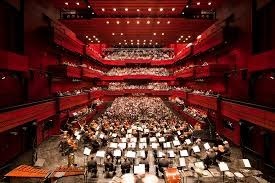
Image courtesy: Harpa | Henning Larsen
Walt Disney Concert Hall, USA
Designed by Frank Gehry with acoustics by Yasuhisa Toyota, this space uses curved wooden surfaces to enhance warmth and clarity. It highlights how material selection directly influences sound quality.
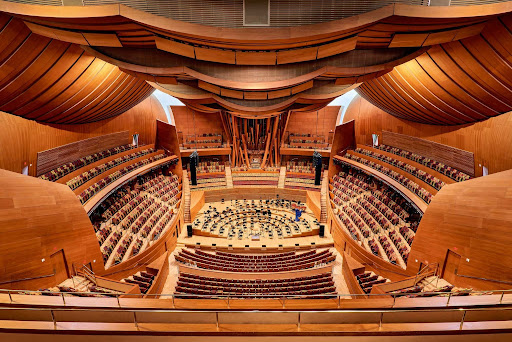
Image courtesy: Detour la
Elbphilharmonie, Germany
One of the most advanced acoustic interiors in the world, this concert hall features thousands of uniquely shaped panels designed to control sound at a micro level. It demonstrates how precision in interior detailing can transform sound experience.
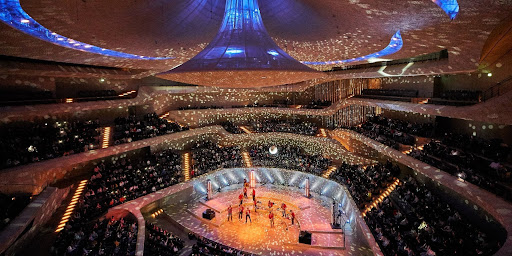
Image courtesy: Elbphilharmonie
Acoustic Design in India: A Strong Example
While global examples often lead the conversation, India also has spaces that showcase thoughtful acoustic design.
Jamshed Bhabha Theatre (NCPA, Mumbai)
One of India’s best acoustically designed theaters, this space is built to perform exceptionally well without relying heavily on electronic amplification. Its fan-shaped seating layout ensures that sound reaches every corner clearly, creating a balanced listening experience for the audience.
Interior Design Insight:This is pure interior detailing-shape, seating, and materials are carefully designed so every person in the space can hear perfectly. It proves that even in India, design decisions can directly enhance sound experience when planned from the beginning.
What Interior Designers Can Learn from These Spaces
These examples are not just architectural marvels-they are lessons in design thinking.
They show that:
- Sound should be considered from the concept stage
- Materials are not just visual choices-they are acoustic tools
- Form and geometry influence how sound travels
- User comfort depends on both visual and auditory experience
For interior designers and architects, this shifts the mindset from:
“How does this space look?”
to
“How does this space feel?”
to
“How does this space feel?”
The Role of Interior Designing Schools in Shaping the Future
As the demand for better-designed spaces increases, interior designing schools have a responsibility to evolve their curriculum.
Institutions like Dreamzone are part of a new wave of design education that focuses on:
- Practical, real-world learning
- Multi-sensory design approaches
- Industry-relevant skills
- Bridging the gap between theory and application
By integrating acoustic awareness into interior design studies, future designers can create spaces that are not only visually appealing but also comfortable, functional, and human-centric.
Conclusion: The Future of Interior Design Is Sensory
The next generation of interior designers and architects will not be defined by how well they decorate a space, but by how well they design experiences.
And experience is not just visual.
It is sensory.
It is emotional.
It is sensory.
It is emotional.
It is about how a space sounds as much as how it looks.
As interior designing studies continue to evolve, one thing is clear:
Designing for sound is no longer optional-it is essential.
Frequently Asked Questions


Corporate Headquarters
No. 25, Dr. Radhakrishnan Salai, Mylapore,
Chennai - 600 004, Tamil Nadu, India.
+91 98843 85048


Flagship Events
Trending Courses
Fashion Design
Interior Design




© Dreamzone , All rights reserved